
Most north Indian states reported below-normal temperatures on Monday, with rain and thunderstorms lashing parts of Uttar Pradesh, Rajasthan, and Himachal Pradesh. The southwest monsoon is expected to arrive in Kerala in the next two to three days.

The southwest monsoon has advanced across northern Indian states, leading to widespread rainfall, waterlogging, road blockages, and rain-related deaths, particularly in Himachal Pradesh and Rajasthan. The Centre is monitoring the situation, especially concerning potential drought conditions in some areas due to the El Nino effect.

North India is experiencing an intense heatwave, with temperatures soaring to 48 degrees Celsius in some areas. Several states have issued warnings and advisories as the heatwave is expected to continue.

Mumbai has spent four centuries building folklore around its monsoon: The potholes, the delayed trains, the office debates about whether it will 'break' this week or next. It turns out the rain was always a market. Nobody had built the exchange for it until now!

Many places across northern states including Delhi recorded above-normal temperatures crossing 40 degrees Celsius, while the India Meteorological Department warned of heatwave conditions in parts of Uttar Pradesh in the coming days. Jammu and Kashmir saw a dip in temperatures with fresh snowfall in the higher reaches and rainfall in the plains.

A new western disturbance brought thunderstorms and rain to parts of northern India, with hailstorms and snow reported in several regions. The weather caused flooding in Jammu and Kashmir and prompted a yellow alert in Delhi.

Northern states in India are experiencing severe heatwave conditions, with temperatures reaching up to 46.6 degrees Celsius. The heatwave has impacted daily life, leading to a decline in tourism and increased power demand. Authorities have issued advisories and implemented measures to mitigate the effects of the extreme heat.

Several states in north India, including Rajasthan and Himachal Pradesh, experienced varied weather conditions, including light to moderate rainfall, fog, and temperature fluctuations.

A severe cold wave has gripped North India, with temperatures plummeting to near-freezing levels in several areas. The cold wave has disrupted daily life, with dense fog affecting visibility and forcing people to stay indoors.

Unseasonal rainfall could damage standing wheat crops, especially late-sown fields nearing maturity and grain-filling stages.

Work has commenced on restoring the North and South Blocks to their original design, paving the way for the Yuge Yugeen Bharat National Museum project, with a target completion date for the first phase set for 2028.

Monsoon rains have unleashed widespread destruction across India, claiming seven lives in Himachal Pradesh and Karnataka due to landslides and floods, while heavy downpours have disrupted normal life and triggered red alerts in Maharashtra and other regions.

The weather office has warned that the prevailing monsoon conditions could trigger flash floods, landslides, waterlogging and a further rise in river levels across the Northeast.

A three-hour heavy downpour accompanied by a dust storm hit Delhi-NCR early morning on Friday, causing flight delays and traffic disruptions as seven people were killed in rain-related incidents across north India.

Increased input costs due to geopolitical conflict in West Asia and unseasonal rain in March negatively impacted volumes of consumer durables makers, particularly air conditioners, in Q4FY26, leading to projected declines in EBITDA and APAT despite revenue growth.

The monthly average rainfall over India is expected to be below normal during July, the India Meteorological Department said on Tuesday in its monthly forecast.

'We should expect extreme heat, extreme rains, floods, landslides and maybe cyclones. Not just this year, in the coming year as well.'

The IMD is predicting close to a 60% probability of deficient rainfall, which means there is a strong possibility that the monsoon this year will be poor.

Several parts of India are experiencing a severe heatwave, with temperatures soaring past 44 degrees Celsius. States are issuing alerts and taking measures to protect people and animals from the extreme conditions.

At least 28 people died in rain-related incidents Sunday as heavy downpours lashed north and northwest India, causing landslides, traffic chaos and house collapses, as well as a dam breach which inundated several villages in Haryana.

Large parts of India are experiencing a severe heatwave, with temperatures soaring to dangerous levels. Authorities have issued alerts and health advisories as the heatwave intensifies across multiple states.

A poor monsoon could drag overall economic growth and compound the impact of the West Asia conflict on the Indian economy.

Thousands and thousands and thousands of adults owe their lives to the commitment and medical fervour of Dr Armida Fernandez, who a grateful nation honoured with the Padma Shri this year.

The weather department has said that the skies are expected to be partly cloudy for the next few days in Delhi.

The Northern Railways said it has cancelled around 17 trains and diverted around 12 others, while traffic has been suspended at four locations due to waterlogging.


The aftermath of the cloudburst triggered by heavy rainfall in Uttarakhand and Himachal Pradesh.

A cold wave has intensified in most parts of north India, with temperatures in the Kashmir Valley dipping below freezing point. The national capital saw a brief respite from the bitter cold during the day, but cold conditions persisted in parts of Rajasthan and Himachal Pradesh. The weather department has issued a yellow warning for cold wave, ground frost and dense fog for some places in Himachal Pradesh. There is a possibility of rain and snowfall in parts of northwest India later in the week.
The record monsoon rains across India during the June to September months was 937.2 millimetres, the 5th-highest since 2001 and 38th-highest since 1901.

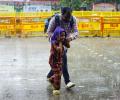
The rain ebbed in some places in north India and pelted down in others on Tuesday, with at least seven more people dead and hundreds stranded as raging waters gushed through villages, towns and fields -- from the desert state of Rajasthan to the hills of Himachal Pradesh.

Cyclone Ditwah exits Sri Lanka after causing widespread destruction and over 120 deaths, heading towards the Indian coast. Heavy rains and high winds are expected to continue.

The IMD had said the Southwest Monsoon would hit parts of north India including Delhi on July 10, but it had not occurred till Sunday evening.

Satellite imagery showed a layer of dense fog extending from Punjab and north Rajasthan to the northeast. Patches of fog were also visible along the east coast.

Temperatures remained above 45 degrees Celsius in large parts of Rajasthan, Haryana, Delhi, Chandigarh and Uttar Pradesh, affecting daily life as many chose to remain indoors in the afternoon.
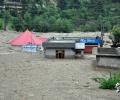
As the weather improved in parts of north India, which was pummelled by heavy rains for days, authorities on Wednesday worked on a war footing to rescue stranded tourists, restore vehicular traffic on arterial roads and prevent floodwaters from entering new areas.
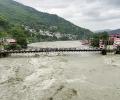
Incessant rains unleashed more death and destruction on Monday in parts of north India, with 37 people killed in landslides and other rain-related incidents in the last two days even as the Army and NDRF teams stepped in to intensify the relief and rescue operations.

Unexpected rains across North India have devastated the Ravana effigy market, leaving artisans facing significant financial losses as their creations are damaged beyond repair. They appeal for government assistance.

Heavy rainfall across North India leads to fatalities, structural damage, travel disruptions, and school closures. Eastern states brace for more rain.
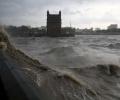
The wind speed, reaching 45-55 kmph and gusting to 65 kmph, is likely to prevail over the North Maharashtra coast between October 3 and 5.

To ensure immediate cooling of the body, the hospital has set up a first-of-its-kind heatstroke unit.
